

Too many fences in Ottawa lean or shift just months after installation. The root cause? Posts set without the right depth, spacing, and alignment for local soil and weather. How to install fence posts correctly makes all the difference in keeping your fence straight and secure through every season. Read on to learn the key steps that protect your investment and ensure a fence that stands tall for years.
Mastering Fence Post Installation
Ottawa Soil and Weather Challenges
Ottawa’s unique soil and weather conditions demand a precise approach to fence post installation. Understanding these challenges sets the stage for a sturdy fence.
Ottawa’s climate is harsh. Temperatures swing from freezing winters to warm summers. The soil is a mix of clay and silt, which expands and contracts with moisture. This movement can cause fences to lean or shift. Knowing the local environment is key to a successful installation. Most people think any post depth will do, but in Ottawa, precise measurements matter.
Importance of Proper Post Setting
A well-set post is the foundation of a lasting fence. Here’s why getting it right matters.
When fence posts are set firmly, they provide stability. They keep your fence upright and aligned. Without proper setting, even the best materials will fail. Proper post setting involves considering depth, spacing, and alignment. Fence post depth in Ottawa is crucial because of the frost line. Posts must reach below the frost line to prevent heaving during freeze-thaw cycles. This protects your investment and ensures durability.
Avoiding Common Installation Mistakes
Avoiding errors in installation saves time and money. Here’s what to watch out for.
Common mistakes include setting posts too shallow or without proper alignment. Shallow posts are prone to frost heave. Misaligned posts make panels hard to attach. Use a fence alignment string line to ensure straightness. Another error is ignoring soil conditions. Each type of soil requires specific techniques. Learning from others’ mistakes enhances your fence’s longevity.
Key Post-Setting Considerations
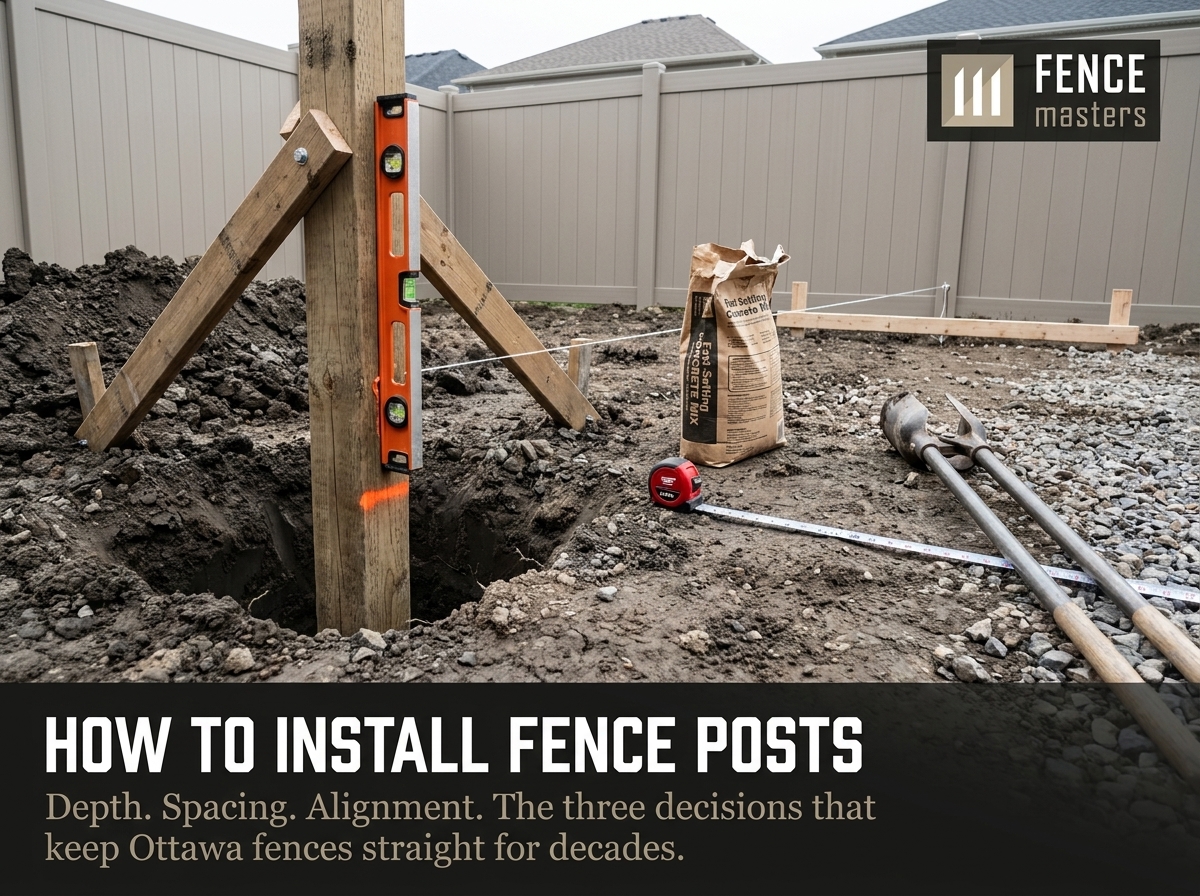
Determining Fence Post Depth
Getting the depth right is the first step to a sturdy fence. Here’s how to do it.
-
Measure the Frost Line: In Ottawa, this is about 4 feet deep. Ensure your posts are below this to avoid frost heave.
-
Consider Your Fence Height: Taller fences need deeper posts. For a 6-foot fence, aim for a post depth of at least 4 feet.
-
Use the Right Tools: A post hole digger or auger helps achieve the necessary depth. This step ensures your fence stays put through all seasons.
Effective Spacing Guidelines
Spacing affects both the look and strength of your fence. Here’s how to get it right.
Proper spacing distributes the load of the fence evenly. Typically, posts should be 6 to 8 feet apart. This distance balances strength and material use. Too close, and you waste materials. Too far, and the fence may sag. Use a tape measure for consistent spacing. Following these fence post spacing guidelines prevents future sagging and ensures a neat appearance.
Ensuring Accurate Alignment
Alignment is key to a professional-looking fence. Here’s how to achieve it.
Align posts with a string line. This ensures they are straight and evenly spaced. Check alignment from different angles. A level can help you maintain vertical accuracy. Proper alignment avoids the frustration of panels not fitting correctly. This process might seem tedious, but it’s essential for a high-quality finish.

Material Choices for Longevity
Concrete vs Gravel: Pros and Cons
Choosing between concrete and gravel impacts the stability and cost of your fence.
Concrete offers solid support and is a popular choice. It anchors posts securely, reducing movement. However, it can be more labor-intensive to install. Gravel, on the other hand, allows for better drainage. It can be easier to work with but might not offer the same level of stability as concrete. Consider the specific needs of your project and budget when making a decision.
Utilizing Helical Piles in Ottawa
Helical piles are gaining popularity as a foundation choice in Ottawa. Here’s why.
These screw-like piles are driven deep into the ground, offering strong support. They are ideal for areas with challenging soil conditions. Helical piles adapt well to the freeze-thaw cycle, minimizing movement. They are a smart choice for those seeking a fence contractor in Ottawa who understands local conditions. While they may cost more initially, their durability can save money over time.
Selecting the Right Fence Type
The type of fence you choose affects not only aesthetics but also longevity.
Options range from vinyl fences in Ottawa known for low maintenance, to classic wood fences offering natural beauty. Chain link and iron fences provide durability and security. Each material has its benefits. Consider your needs: privacy, security, or aesthetic appeal. Also, think about maintenance. Some materials require more upkeep than others. Selecting the right type ensures your fence remains a valued asset.
In conclusion, mastering fence post installation involves understanding local challenges and making informed choices. By focusing on depth, spacing, and alignment, you set the foundation for a fence that withstands Ottawa’s climate. Whether you opt for concrete, gravel, or helical piles, your material choice impacts the long-term success of your project. With careful planning and execution, your fence will stand tall and proud for years to come.